
Luxury Travel in India: The Best Hotels and Resorts
Explore the top luxury hotels and resorts in India, from the majestic palaces of Rajasthan to the serene retreats in the Himalayas and coastal getaways. Discover unparalleled hospitality, unique exper...
Celebrating India's Cultural Kaleidoscope: Festivals, Art, and Heritage
Discover the vibrant festivals, diverse art forms, and rich heritage of India. Explore how India's cultural kaleidoscope weaves together traditions, community bonds, and culinary delights in this in-d...
India without Filters: Unusual Traditions that Surprise Tourists
From eating with hands to sacred cow reverence, India’s unique traditions may surprise travelers. Discover the meaning behind these customs, learn how to engage respectfully, and explore the cultura...How to Evaluate a 1939 Penny No Mint Mark Like a Collector
Most collectors see a 1939 penny no mint mark and assume it is just another common Wheat cent. In most cases, that is true: it is not a key date, and even a semi-key. Large numbers were struck in Philadelphia.
Yet some examples are worth more than others. The difference does not come from the missing mint mark. It comes from condition, color, and specific varieties. To evaluate this coin properly, you need to look at it the way a collector does — step by step.
Basic Specifications and Correct Identification
Before thinking about price, let’s confirm the fundamentals. Many pricing mistakes begin with misidentification.
Feature | Detail |
Year | 1939 |
Mint mark | None (Philadelphia issue) |
Composition | 95% copper, 5% tin & zinc |
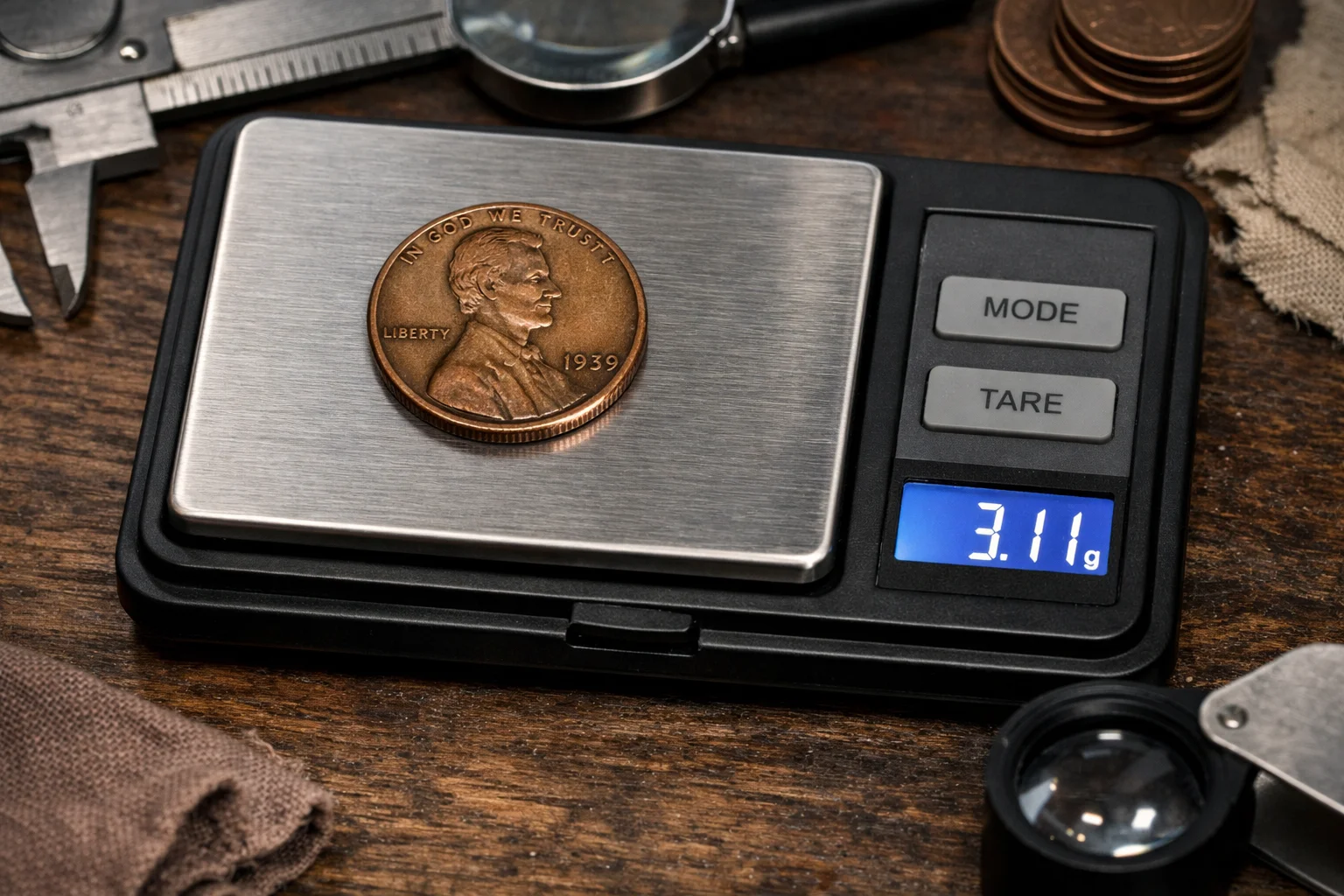
Weight | 3.11 grams |
Diameter | 19.05 mm |
Edge | Plain |
Obverse | Abraham Lincoln |
Reverse | Wheat ears |
A 1939 coin without a mint mark is a Philadelphia piece. That is expected. Denver coins show a small “D.” San Francisco pieces display an “S.” If there is no letter, it is not an error.
Weight should be close to 3.11 grams. Minor tolerance is normal. Large deviation may signal damage or alteration.
Diameter should measure 19.05 mm. The edge must be plain.
To confirm these details, try our coin scanner app. Coin ID Scanner can identify the year, confirm design details, and store notes in a digital collection. The app supports identification, but does not replace visual grading.
Correct identification is the first filter. Without it, value discussion is meaningless.
Step One: Confirm It Is Truly a Philadelphia Issue
In 1939, three mints produced cents:
Mint | Mintage (approx.) |
1939 (Philadelphia) | ~316 million |
1939-D | ~15 million |
1939-S | ~52 million |
Philadelphia struck over 300 million coins. That is a large number. Availability remains high today.
Denver produced the lowest quantity that year. Fifteen million sounds small, but in the context of the 1930s, it is not rare. Compare it to 1931-S, which had under one million. That is a true key date. 1939 does not fall into that category.
San Francisco output sits in the middle. It is also accessible.
The Philadelphia version, which lacks a mint mark, represents the majority of surviving pieces. Its value does not come from the scarcity of the issue, but from preservation.
Step Two: Evaluate Surface Preservation
Condition drives most price differences. So, start with the obverse.
Look at Lincoln’s cheek. Check the jawline. Study the hair above the ear. Inspect the coat folds.
On the reverse, examine the wheat lines. Look at the separation between the grains. Observe the lettering sharpness.
Circulation wear produces smooth, even flattening. High points lose detail first. Luster fades. The surface becomes dull.
Weak strike is different. Details may look soft, but the metal texture remains intact. The surface still shows natural grain.
Post-mint damage appears irregular. Scratches cut into the metal. Dents disrupt shape. These marks are not part of the minting process.
Collectors separate these categories carefully. Confusion between them leads to inflated expectations.
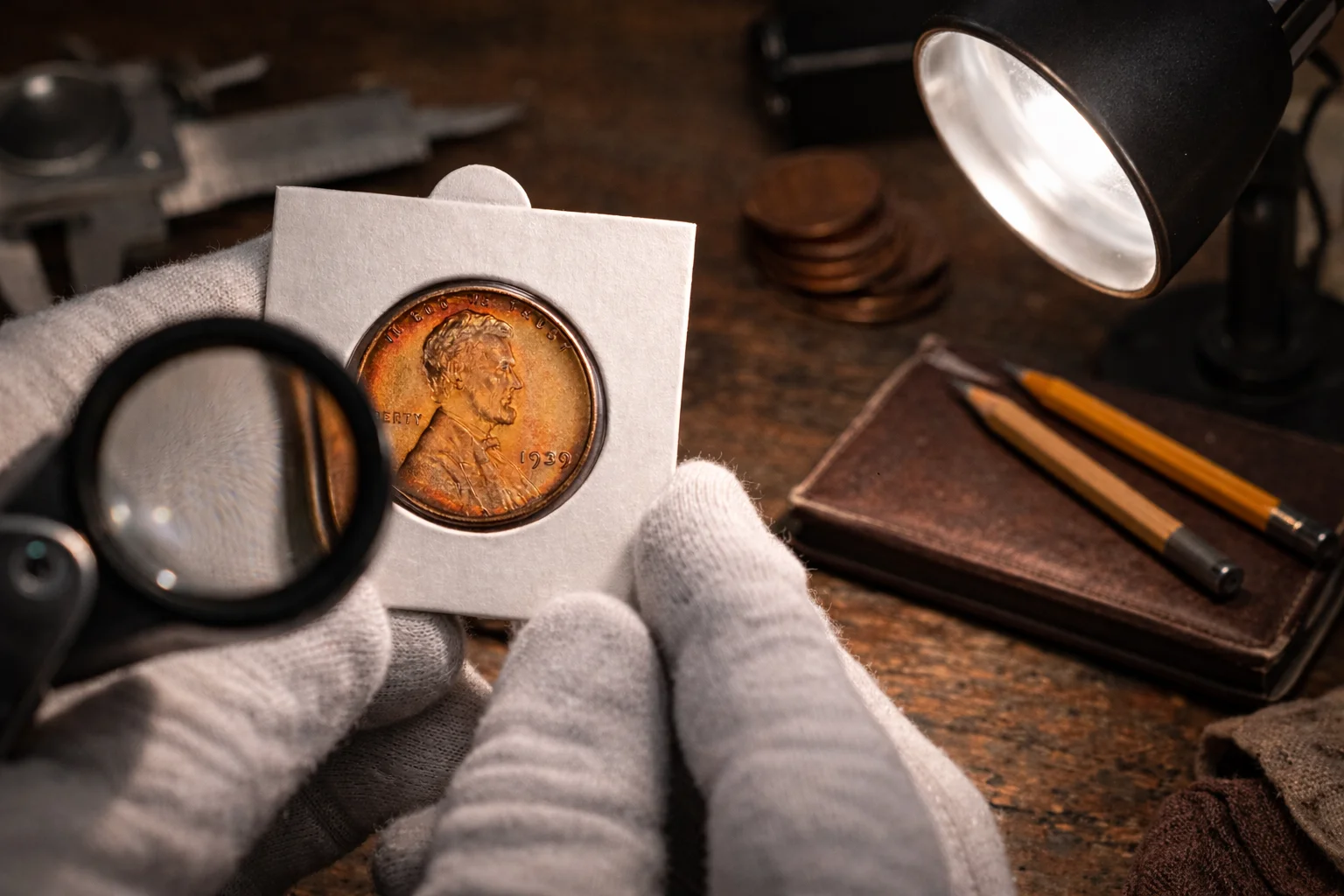
Mint State coins retain original mint luster. Light moves across the surface evenly. Details remain sharp. Contact marks may appear, but wear is absent.
Even a single grade point at higher levels can change the price noticeably. That is where careful inspection matters.
Step Three: Understand Color Designation (BN, RB, RD)
Copper changes over time. Exposure to air causes oxidation, thus the surface darkens.
Collectors classify uncirculated copper cents by color.
Brown (BN) shows a full brown tone. The original red has faded.
Red Brown (RB) shows a mix of red and brown. Some original color remains.
Red (RD) displays strong original red over most of the surface.
Color affects value most strongly in Mint State grades. An MS65 Brown coin may carry a modest premium. An MS65 Red example can sell for several times more.
Originality matters more than brightness. Altered surfaces lose market trust. When a coin is polished or chemically treated, the texture changes. The surface may appear brighter, yet the metal no longer looks natural. Experienced collectors detect that quickly. Market demand declines when originality is compromised.
For copper, preservation is critical.
Known 1939 Error Types
Before checking for specific defects, understand which varieties are documented.
Error Type | What to Look For | Approximate Range* |
Doubled Die Obverse | Strong doubling on LIBERTY or date | $40–$150+ |
Repunched Mint Mark (S issues) | Secondary S impression | $25–$120 |
Improper Alloy (“Woody”) | Streaked wood-grain appearance | $15–$80 |
Die Cracks / Breaks | Raised metal lines | $10–$60 |
Machine Doubling | Flat shelf-like doubling | Minimal premium |
*Ranges depend on clarity, grade, and buyer demand.
These figures represent general marketplace observations. Strong examples bring more, while weak or worn specimens bring less. Online auction prices may vary significantly.
The 1939 Philadelphia coin cannot show a repunched mint mark, since it has no letter. That variety applies to the 1939-S or D issue.
Errors must originate during minting. Post-mint damage does not qualify.
Step Four: Inspect for Doubled Die Obverse
The most discussed 1939 variety involves doubling on the obverse.
True doubled die appears as distinct, separated outlines on letters or numbers. It is visible on LIBERTY, IN GOD WE TRUST, or the date.
Examine the eyelid area as well. Some genuine doubled dies show separation there.
Machine doubling differs. It looks flat and shelf-like. It lacks depth. It reduces metal rather than adding thickness.
Strong doubled dies attract collector attention. Clear examples command higher premiums within the typical range.
Step Five: Evaluate Alloy and Surface Texture
Some 1939 cents display a streaked appearance known as “wood grain.” This effect results from imperfect alloy mixing during production.
The surface shows lighter and darker bands. The pattern follows the metal flow.
This appearance is not damaged, as it originates in the alloy composition.
Market reaction varies. Some collectors appreciate the visual character. Others prefer uniform color. Prices remain moderate unless combined with high grade.
Check that streaks are natural and consistent with copper flow. Random discoloration from cleaning or environmental exposure does not qualify.
Step Six: Decide If Professional Grading Is Worth It
Professional grading involves cost. Submission fees, shipping, and insurance add up.
Consider certification if:
The coin appears Mint State.
It retains a strong red color.
It shows a clear doubled die.
Surface quality is above average.
Avoid grading if:
The coin is heavily circulated.
Damage is present.
The color is fully brown in the lower Mint State.
The variety is minor.
High grades such as MS66 Red attract the strongest premiums for this date. Lower grades remain accessible.
Practical Value Overview (No Errors)
Standard examples without major errors follow general market ranges:
Grade | Typical Range |
Circulated | $0.05–$0.50 |
AU | $2–$5 |
MS63 BN | $10–$15 |
MS65 RD | $40–$90 |
MS66 RD | Market dependent |
Circulated pieces rarely exceed small premiums. AU coins show light wear and modest value.
Mint State coins create the main price jumps. Color influences price strongly at this level.
These ranges exclude major error varieties.
When Does It Become Truly Valuable?
Age alone does not create a premium. Mintage alone does not define rarity for this year.
A 1939 Philadelphia cent enters the category of pieces considered coins worth money only under specific conditions:
High Mint State preservation.
Strong original red color.
Verified doubled die variety.
Exceptional eye appeal.
Without those elements, the coin remains common.
This year is not a key date. It is not semi-key. Its interest lies in quality rather than scarcity.
The Collector’s Perspective
A collector approaches a 1939 penny differently from a casual seller.
The first question is not “How old is it?” The question is “How well did it survive?”
Examine the surfaces carefully. Compare details to known Mint State references. Evaluate color honestly. Confirm any variety with magnification.
Understand the historical context. 1939 marks the final full year before global conflict reshaped production priorities. Yet that historical setting does not translate into rarity for the Philadelphia cent.
The coin remains accessible. That accessibility makes it useful for building a Wheat cent set in higher grades without extreme expense.